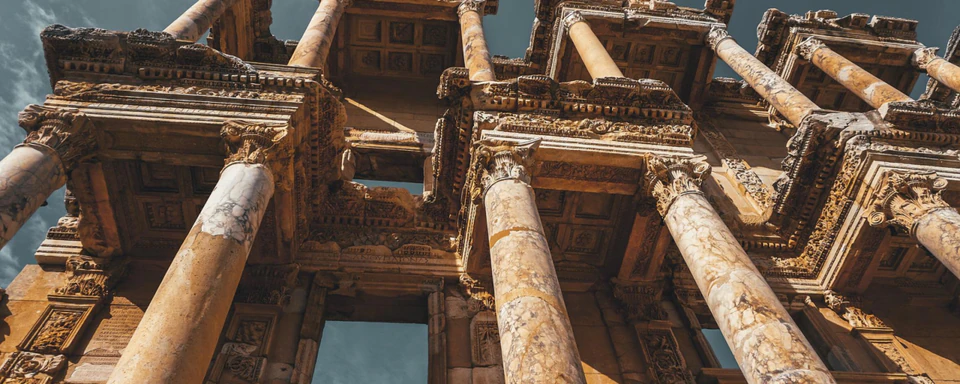
Chapter 03The Aegean37.94° N · 27.34° E
Ephesus
The most well-preserved Roman ruins in the world — a veritable open air museum.
Open Air Museum
Where Ancient Civilizations Rest
Ephesus is a city to read on foot: monumental facades, paved streets and houses that bring the daily life of antiquity into focus. Its surviving remains reflect a long sequence of settlements, with the Roman city forming a particularly vivid part of the story.
The wider UNESCO-listed landscape includes the sanctuary of Artemis and sites associated with the development of Christianity. Rather than compressing them into a single narrative, a knowledgeable guide helps distinguish the different periods and traditions.
We plan time for the ancient city and, according to your interests, the Terrace Houses, Selçuk or nearby religious sites. Shade, walking distances and the season matter here; a well-paced visit leaves more room to look closely.
“Transport yourself back to a time when Roman soldiers, philosophers, and disciples walked through these once-magnificent streets and structures.”
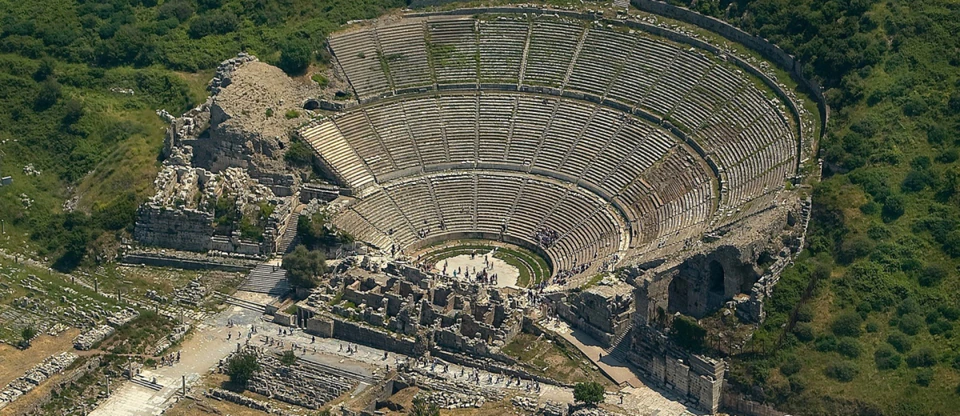
Wander the Ruins of Ephesus’ Ancient City
The Library of Celsus, the Great Theatre and the streets between them reveal the scale and ambition of Roman Ephesus. Public spaces tell one story; the details of shops, homes and infrastructure tell another.
The Terrace Houses offer a more intimate view, with mosaics and wall decoration that illuminate affluent domestic life. We discuss separate admission and the walking involved when planning your visit.
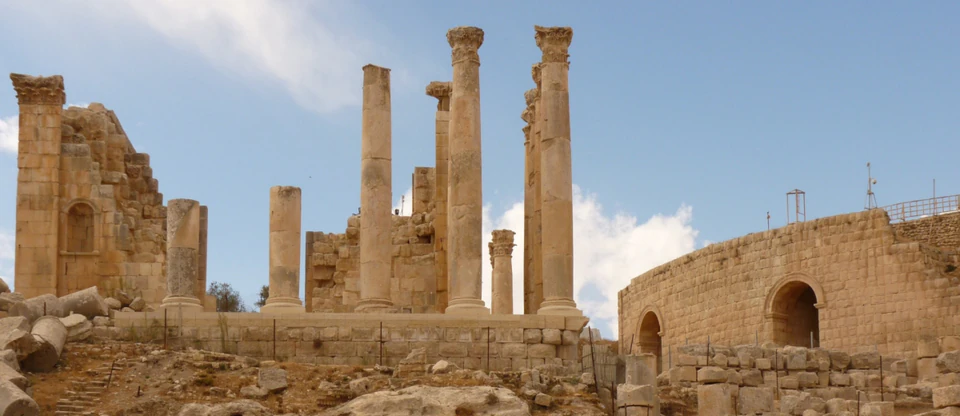
Ephesus’ Lost Wonder: The Temple of Artemis
The Temple of Artemis was celebrated as one of the Seven Wonders of the Ancient World. Today, the surviving foundations and reconstructed column require a different kind of looking: understanding a great sanctuary through the traces it left behind.
A guide can set the site in the religious and commercial life of ancient Ephesus and explain its successive phases. Paired with the ancient city, it adds context rather than another monumental facade.
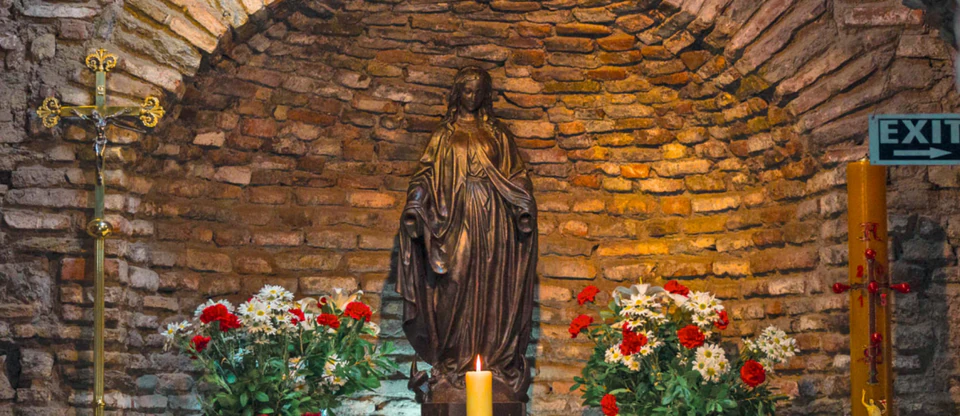
The House of the Virgin Mary
In the hills near Ephesus, the House of the Virgin Mary is a place of pilgrimage associated by tradition with Mary’s later life. The quiet stone chapel draws visitors of different faiths.
We approach it as a living religious site, with space for quiet reflection. Your guide places its pilgrimage traditions in context, allowing you to connect with the place in your own way.
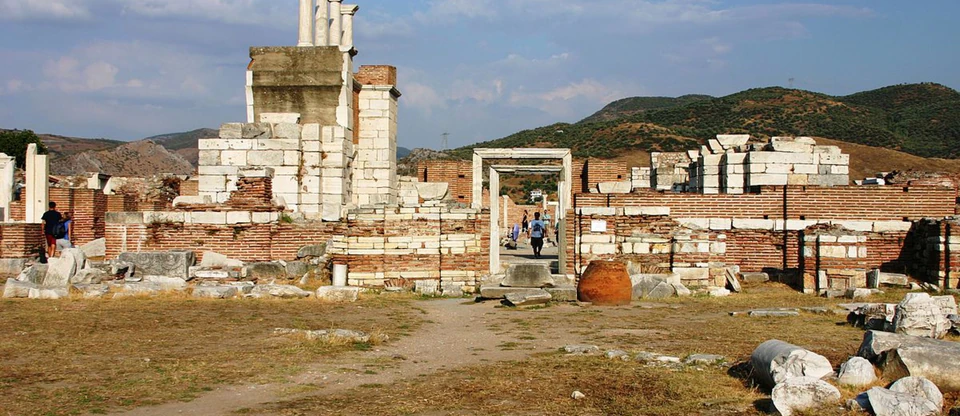
Basilica of St. John
The Basilica of St. John stands on Ayasuluk Hill above Selçuk, built around the traditional burial place of the apostle. Its remains evoke the scale of the sixth-century church associated with Emperor Justinian.
Walking the site connects architecture with the religious history of the region. Your guide helps distinguish the surviving fabric, reconstructions and traditions attached to the place.
A personal perspective — Ephesus
A Closer Look at the Terrace Houses
The Terrace Houses reward time and attention. With your private guide, explore the mosaics, painted walls and domestic spaces that reveal a more personal side of Roman Ephesus.
Admission, opening arrangements and accessibility are checked in advance. This is a privately guided visit to a shared archaeological site, not exclusive access.
Arranged privately, by relationship. Ask us.
The next step
Begin in Ephesuswith family in Türkiye
Tell us what draws you to Ephesus. We will discuss your interests, dates and preferred pace before shaping a proposal.